
Historic Home Restoration in South Jersey: A Homeowner’s Guide

What if the best way to protect an old home’s character is to pause before changing anything? Historic home restoration South Jersey starts with understanding what’s original, what needs repair, and what may be hidden behind walls or beneath floors. A careful first assessment can shape the project before you decide on layout changes, materials, or construction.
It’s natural to have questions about which details to preserve, how much work the house may need, or whether local review applies. A thoughtful restoration can respect a home’s architectural character while making daily life more comfortable. Balancing both takes careful investigation and planning.
This guide explains how to assess an older home, set priorities, and plan the sequence from early investigation through approvals and construction. You’ll also find practical questions to ask a prospective contractor about comparable older-home projects, preservation coordination, references, and a written scope. With the right information, you can compare options before committing to the work.
Table of Contents
Historic Home Restoration in South Jersey: What the Project Really Involves
Assessing a South Jersey Historic Home Before Setting the Restoration Scope
Choosing a Historic Home Restoration Contractor in South Jersey
Planning Historic Home Restoration Permits and Reviews in South Jersey
Moving Forward With a South Jersey Historic Home Restoration
Historic Home Restoration in South Jersey: What the Project Really Involves
Historic home restoration South Jersey projects begin with the house itself: its condition, surviving architectural details, and how its owners need it to function. “Restoration” doesn’t automatically mean returning every room to a past appearance or leaving the home untouched. It describes a considered approach to repairing, changing, and using the property.
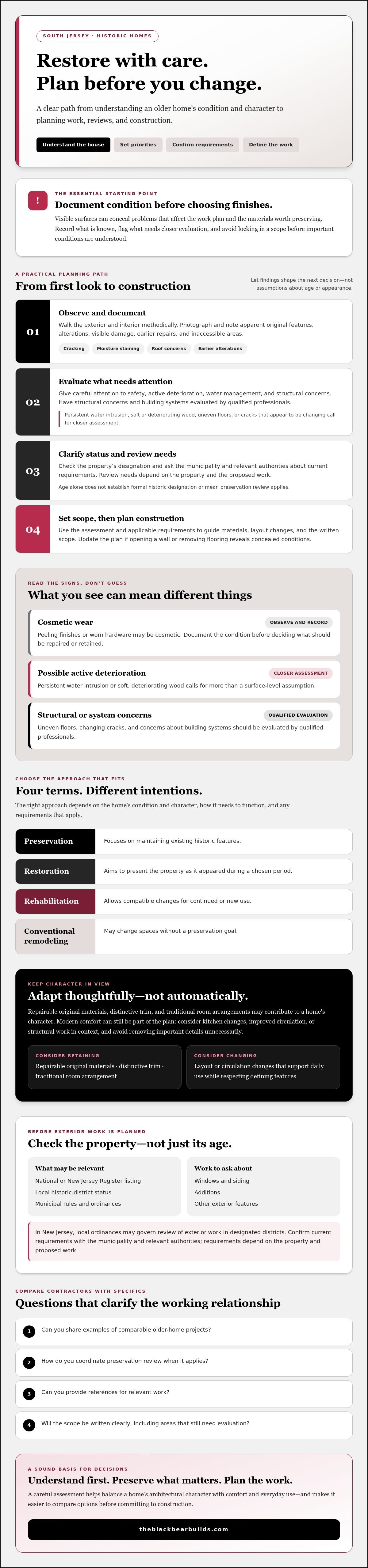
Restoration is work planned around a home’s condition and character, its intended use, and any requirements that apply to the property. This matters because preservation, restoration, rehabilitation, and conventional remodeling aren’t interchangeable. Preservation focuses on maintaining existing historic features. Restoration aims to present the property as it appeared during a chosen period. Rehabilitation allows compatible changes for continued or new use, while conventional remodeling may change spaces without a preservation goal. The broader principles of historic preservation can help homeowners understand why repair and adaptation are weighed carefully.
How restoration differs from a standard South Jersey renovation
Original materials, craftsmanship, and layout can influence how work is approached. A wood sash window with repairable parts, for example, may be a candidate for careful repair rather than automatic replacement. Distinctive trim or a traditional room arrangement may also be worth retaining if it contributes to the home’s character and works for the household.
That doesn’t mean every old feature must remain unchanged. Modern comfort can be part of a thoughtful plan, but proposed changes should be considered in context. Reworking a kitchen, improving circulation, or planning structural work may be possible while retaining important details. First identify what gives the house its character, then evaluate which changes meet your needs without unnecessarily removing those features.
When a South Jersey home may need preservation-minded work
Peeling finishes or worn hardware may be cosmetic. Persistent water intrusion, soft or deteriorating wood, uneven floors, or cracks that appear to be changing call for closer assessment. These conditions can involve more than appearance, so have structural concerns and building systems evaluated by qualified professionals instead of assuming they are simple repair items.
Age alone doesn’t establish that a home is formally designated historic or subject to preservation review. National or New Jersey Register listing, local historic-district status, and municipal rules can have different implications. In New Jersey, local ordinances may govern review of exterior work in designated districts. Check the property’s status and ask the municipality about current requirements before planning changes to windows, siding, additions, or other exterior features. Set the scope according to the home’s needs and applicable requirements, not assumptions based on its age.
Assessing a South Jersey Historic Home Before Setting the Restoration Scope
Before choosing paint, flooring, or fixtures, build a clear record of the home as it stands. A condition assessment should come before finish selections because visible surfaces can conceal problems that affect both the work plan and the materials worth preserving. An early review won’t reveal everything, but it gives you a more informed starting point and helps keep assumptions out of the project scope.
For historic home restoration South Jersey, allow time for investigation as well as construction planning. Opening a wall or removing a floor covering may reveal concealed damage or previous alterations. Until those conditions are understood, a fixed scope can be premature. Record what’s known, flag what needs closer evaluation, and update the plan as reliable information becomes available.
What to document during an initial property review
Walk through the exterior and interior methodically. Note features that appear original, details that have been altered, visible damage, and signs of earlier repairs. Take photographs and add brief notes about each location so you can explain observations to contractors or specialists. Record cracking, moisture staining, roof concerns, and areas that aren’t accessible or need further assessment.
Collect useful records, too. Available plans, prior permits, maintenance records, and information about the property’s designation can help clarify what has changed and what may require review. If you’re unsure where to verify historic status or find state guidance, consult the New Jersey Historic Preservation Office and confirm property-specific questions with the municipality.
How to prioritize repairs while preserving character
Separate urgent concerns from improvements that can be planned later. Safety issues, active water intrusion, and conditions that may indicate structural damage deserve qualified evaluation before aesthetic upgrades. For example, a leak near a distinctive ceiling calls for investigating the source and affected materials before deciding whether to refinish or replace the surface.
Don’t disturb uncertain older materials or assume a crack, sag, or damp area is only cosmetic. Ask qualified professionals to assess structural conditions and building materials where needed. Then compare repair, careful replacement, and redesign options against your documented goals and any applicable preservation guidance. Repair may retain more original material in some cases. In others, replacement or adaptation may be appropriate after assessment.
This process helps define what’s known, what remains uncertain, and which decisions should wait. Homeowners considering broader renovation or structural work can review Black Bear Construction’s renovation and structural capabilities as one part of evaluating project fit, while asking directly about relevant older-home examples and preservation coordination.
Choosing a Historic Home Restoration Contractor in South Jersey
The right contractor should explain not only what work they can perform, but how they’ll make and document decisions about the home’s existing materials. General renovation and structural capabilities are relevant, but they don’t by themselves demonstrate experience with historic materials or preservation review. For historic home restoration South Jersey, look for evidence that matches your property’s needs and ask who will manage each part of the project.
Ask about comparable older-home projects and the contractor’s specific role. Did they lead the construction, coordinate specialists, or complete only part of the work? Request references you can contact. Ask those homeowners about communication, change documentation, and how unexpected conditions were handled. If the project involves preservation guidance, discuss how proposed repairs and alterations will be evaluated against resources such as the Secretary of the Interior's Standards for the Treatment of Historic Properties.
Questions to ask before hiring
Use direct questions to understand the contractor’s process. Ask how original features and proposed substitutions are recorded, how you’ll review changes before work proceeds, and how the team responds when concealed conditions alter the plan. Confirm who coordinates with designers, engineers, preservation professionals, or local officials when their input is needed. Clarify who is responsible for structural work, specialty tasks, and finish work.
Compare proposals beyond the bottom line
Read each proposal for its written scope, allowances, exclusions, sequence of work, and responsibility for approvals. A useful proposal separates confirmed conditions from items that need further investigation rather than presenting assumptions as settled facts. Check whether it explains how changes will be documented and schedule impacts communicated. If proposals differ, ask what work, materials, coordination, or investigation each includes before comparing them.
Black Bear Construction’s full-home renovation and structural work may be relevant capabilities to discuss for a project involving broad interior work or structural changes. The company also offers luxury kitchens, spa-inspired bathrooms, and custom interior work, which may be relevant to planned updates. Ask about comparable older-home projects, preservation coordination, and references, then weigh the answers against the written scope and the property’s specific needs.
Planning Historic Home Restoration Permits and Reviews in South Jersey
Before finalizing exterior changes or setting a construction start, confirm which reviews apply to the specific property and scope. Requirements can depend on whether a home is locally designated, its municipality, and the work proposed. A listing on the National or New Jersey Register doesn’t automatically mean the same rules apply to every privately funded project. Local ordinances may separately require review for exterior work in a designated historic district.
Historic review and building permits are distinct processes. A historic commission or other preservation authority may review proposed changes for compatibility, while the municipality’s construction office handles applicable building permits. One process doesn’t automatically replace the other. Procedures and sequences vary, so verify current requirements directly with the municipality and relevant preservation authorities before scheduling work.
How to check whether a South Jersey property has historic status
Begin with municipal planning or historic-preservation staff. Ask which records identify the property, whether it falls within a locally designated district, and whether the proposed work would trigger review. Check relevant New Jersey and National Register resources as well, but don’t assume that register listing carries the same implications as local designation. Confirm boundaries and property-specific status with the municipality.
A practical approval sequence before construction begins
Use this as a planning framework, not a universal permit checklist. Verify the details and order for the property’s location and proposed work.
1. Confirm status. Ask the municipality whether the property is individually designated or within a historic district. Check relevant state and National Register records, then verify any local findings.
2. Describe the proposed work. Identify the changes under consideration, especially exterior alterations, additions, or work affecting character-defining features. Ask which municipal or preservation contacts should review them.
3. Confirm submittal requirements. Ask each relevant authority whether it requires drawings, photographs, material specifications, application forms, or other supporting details. Requirements vary, so don’t rely on another town’s process.
4. Coordinate reviews and permits. Clarify which historic review and building permits apply, who submits each application, and the required order. Verify local sequencing before the contractor schedules affected work.
5. Keep written records. Save decisions, approved plans, permit information, and any conditions or revisions. Share the current documents with the project team before construction proceeds.
A verified approval path helps keep design decisions, applications, and construction planning aligned. If your project also involves broader renovation or structural work, review renovation and structural work with Black Bear Construction, while confirming any preservation-specific experience and coordination approach directly.
Moving Forward With a South Jersey Historic Home Restoration
A considered plan turns early research into practical next steps: document the home, verify applicable requirements, define priorities, then evaluate contractors against the work. For historic home restoration South Jersey, this order helps connect design choices, preservation considerations, and construction planning without assuming every unknown condition is already understood.
Prepare for a useful first conversation
Bring what you’ve gathered so far, including property records, photographs, known concerns, available plans, and any correspondence about reviews or permits. Be ready to explain which original features matter most to you and which functional changes would make the house work better for everyday life. You don’t need every answer before meeting a contractor. You do need a clear account of what’s known and what still needs investigation.
Ask how the contractor would approach uncertain conditions before confirming a final scope. If there are signs of moisture or structural movement, for example, discuss what further evaluation may be needed and how findings could affect the plan. Clarify how recommendations, substitutions, and scope changes will be documented, and who will coordinate with other professionals or authorities if required.
When to consider Black Bear Construction
Black Bear Construction is based in Medford Township and serves South Jersey and nearby Pennsylvania. Its confirmed capabilities include full-home renovations, additions, and structural work, which may be relevant to a project involving extensive interior changes or structural needs. These capabilities aren’t proof of historic-restoration specialization. Before deciding on fit, ask about comparable older-home projects, the team’s precise role, preservation coordination, and references.
Compare the answers with your property’s needs and the written scope. A suitable contractor should communicate what’s included, identify uncertainties, and explain how decisions will be handled as work progresses. The goal is a clear working plan that respects the home while addressing the reasons for the renovation.
After gathering your records and clarifying your priorities, you can discuss your South Jersey renovation project with Black Bear Construction and ask whether its confirmed renovation and structural capabilities align with your plans.
Take the Next Step With a Thoughtful Restoration Plan
A successful historic home restoration South Jersey project starts with understanding the house before deciding what to change. Document its condition, confirm which reviews and permits apply, and set priorities before comparing contractor proposals. A clear written scope, supported by relevant project examples and a defined approach to unexpected conditions, can help you make informed decisions.
Black Bear Construction is a Medford Township-based general contractor serving South Jersey and nearby Pennsylvania, with more than a decade of hands-on experience. Its confirmed services include full-home renovations and structural additions, capabilities that may be relevant to your plans. Ask directly about comparable older-home projects and preservation coordination before deciding whether the team is a fit for your restoration.
Bring your questions, property records, and project priorities to the first conversation. Discuss your South Jersey renovation project with Black Bear Construction and take the next step toward a home that honors its character while supporting the way you live.
Frequently Asked Questions
Do I need approval to restore a historic home in South Jersey?
It depends on the property’s designation, municipality, and proposed work. Some local historic districts review exterior changes, while building permits are a separate process and may also apply. National or New Jersey Register listing alone doesn’t automatically impose the same limits as a local designation. Before finalizing plans, describe the work to your municipal planning or construction office and ask which reviews and permits are required for your property.
How can I find out whether my South Jersey home is historically designated?
Ask municipal planning or historic-preservation staff to check the property and any district boundaries, then consult relevant New Jersey and National Register records. Requirements vary by municipality, so verify the findings locally. This applies whether your home is in Haddonfield, Collingswood, Haddon Heights, Woodbury, Mullica Hill, Medford Township, Marlton, Voorhees, Mount Laurel, Berlin, Southampton, Long Beach Island, Ocean City, Avalon, or Stone Harbor. A listing and local review rules aren’t interchangeable.
Can I modernize a historic home without losing its character?
Yes. Modern comfort and historic character can often be considered together, but the right approach depends on the home, its condition, and any applicable review requirements. Identify the features that contribute most to its character, then assess how layout changes or upgrades could affect them. For example, a kitchen can be updated while considering original trim or room proportions. Confirm whether proposed exterior changes require local review before proceeding.
What should I inspect before starting a historic home restoration?
Document the home’s condition before selecting finishes. Note visible cracking, moisture stains, roof concerns, deteriorating materials, and signs of previous repairs. Prioritize safety, active water intrusion, and possible structural issues for evaluation by qualified professionals. Also gather available plans, permits, maintenance records, and designation information. A visual review can’t reveal every concealed condition, so avoid treating uncertain areas as settled when defining the project scope.
How do I choose a contractor for historic home restoration?
Ask for examples of comparable older-home projects, the contractor’s exact role, and references you can contact. Review the written scope for included work, exclusions, allowances, sequencing, and how changes will be documented. General renovation or structural capability doesn’t by itself establish historic-preservation experience. For a historic home restoration South Jersey project, ask how the contractor handles original materials and coordinates with preservation professionals or local authorities when needed.
Does every older home in South Jersey have historic restrictions?
No. A home’s age alone doesn’t establish formal historic designation or local review requirements. National or New Jersey Register listing and a local historic-district designation can have different implications, and municipal rules may apply to particular work. Before planning exterior changes, ask the municipality whether the property is designated or within a district and whether the proposed scope needs review. Don’t rely on a home’s age, appearance, or a listing alone.
What happens if hidden structural problems are found during restoration?
Pause affected work and have the condition assessed by an appropriately qualified professional before deciding how to proceed. Document what was uncovered, discuss repair options, and ask the contractor to explain how the finding changes the scope, sequence, or schedule. Request written documentation of proposed changes before approving them. If the revised work affects previously reviewed plans, confirm with the municipality or relevant preservation authority whether further review or permits apply.


Comments