
Material Selection for Home Renovation: What to Choose

The most beautiful finish can be the wrong choice if it doesn’t suit the room. Material selection for home renovation typically covers flooring, cabinetry, countertops, tile, lighting, and paint, with each choice weighed for appearance, function, durability, maintenance, and fit with the home. A material that works well in a busy kitchen may not be necessary in a guest room, while wet areas call for surfaces suited to moisture.
It’s natural to want finishes that feel cohesive and reflect your style. The strongest selections also work well in daily life and remain appealing over time. This article explains how to approach material selection for home renovation, what to consider for major surfaces and finishes, and how colors, textures, and details can come together in a unified design. Thoughtful planning helps balance lasting performance with the look and feel you want for your home.
Table of Contents
1. How material choices affect appearance, function, durability, and value
2. A complete list of items and materials a professional helps select for a home renovation
3. How a renovation professional selects flooring, cabinetry, countertops, tile, lighting, and paint
4. How a renovation professional coordinates colors, textures, finishes, and products
1. How material choices affect appearance, function, durability, and value
Material choices shape how a remodel looks, functions, and wears over time. Pale paint can brighten a room, while sturdy flooring may suit a busy entry better than a guest bedroom. Countertops affect both everyday cleaning and a room’s visual character. Good material selection for home renovation considers each surface in light of the room’s purpose, not just its appearance.
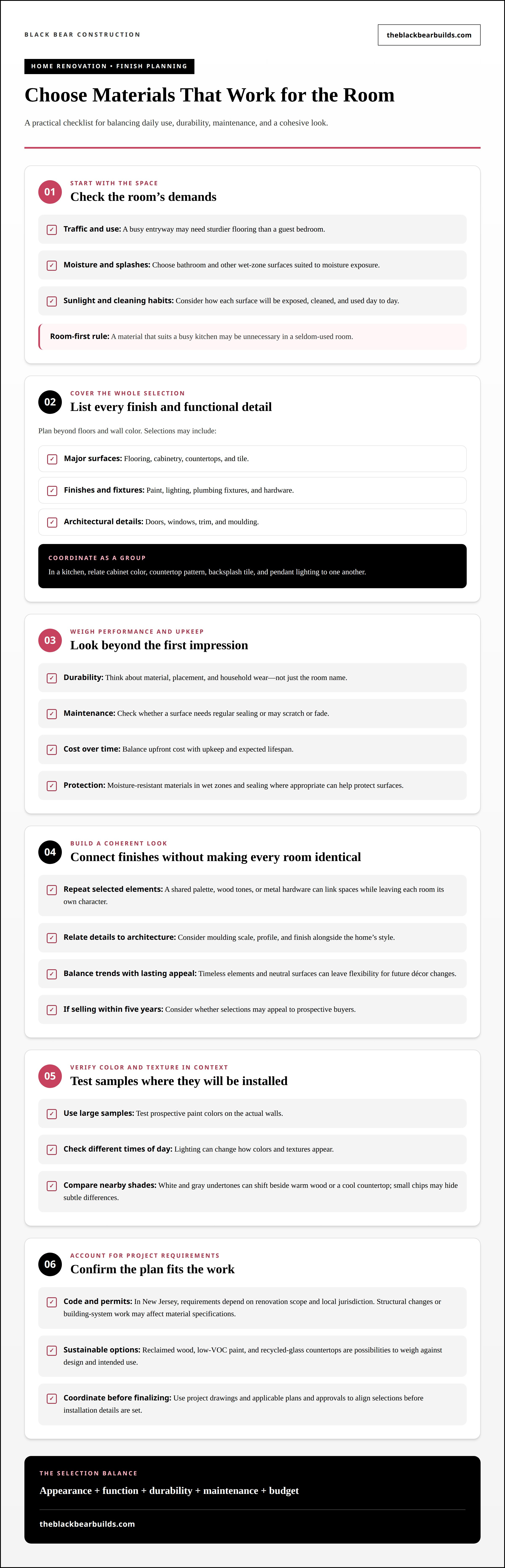
Start with the space’s demands: foot traffic, splashes, sunlight, cleaning habits, and design direction. Bathroom surfaces need to suit moisture exposure, while kitchen materials should stand up to frequent use and routine cleaning. A material that works well in one room may not be right for another.
Then balance appearance, durability, and budget. A striking surface may suit the design, but its upkeep and expected lifespan matter too. Compare maintenance needs with upfront cost, including whether a surface needs regular sealing or may scratch or fade. Material selection for home renovation should account for these ongoing demands as well as the initial outlay.
In New Jersey, code and permit requirements depend on the renovation scope and local jurisdiction. They may affect material specifications for structural changes or work on building systems. A professional coordinates selections with the applicable plans and approvals before finalizing those choices.
Durability depends on the material, its placement, and household wear. A kitchen surface faces different demands from one in a seldom-used room. Moisture-resistant materials in wet zones can help reduce the risk of warping, rot, mold growth, and related damage. Sealing materials vulnerable to moisture or stains can also help protect their service life.
Consider long-term appeal alongside current style. Timeless elements can balance trend-led details, while coordinated paint and countertop choices help create a composed room. If you plan to sell within five years, consider whether your selections may appeal to prospective buyers. A considered choice weighs appearance, performance, maintenance, and budget together.
2. A complete list of items and materials a professional helps select for a home renovation
A home remodel involves more than choosing flooring and wall color. A contractor coordinates visible finishes and functional details, using the project’s design direction and drawings to connect decisions across rooms. Selections may include flooring, cabinetry, countertops, tile, paint, lighting, plumbing fixtures, hardware, doors, windows, trim, and moulding. For example, a kitchen plan can align cabinet color, countertop pattern, backsplash tile, and pendant lighting instead of treating each choice separately.
Your style preferences guide those selections. A professional can translate a desired mood, such as warm and traditional or clean and contemporary, into compatible materials, shapes, and finishes. Drawings help show how a cabinet profile, floor tone, and door design relate to the home’s architecture. If a chosen detail conflicts with the layout or wider design, the plan may need to be adjusted. The goal is to preserve functionality while keeping the home visually coherent.
Moulding deserves a place in the plan. Crown moulding can draw the eye upward, while baseboards create a finished transition between wall and floor. A professional considers their scale, profile, and finish in relation to the home’s architecture. A simple baseboard and restrained crown profile, for example, can complement a clean-lined interior, while more decorative trim may suit a traditional room.
Consistency doesn’t require identical finishes in every room. A shared color palette, repeated wood tones, or coordinated metal hardware can connect spaces while allowing each room its own character. Neutral, timeless surfaces can also leave more flexibility for future décor changes. Sustainable choices may include reclaimed wood, low-VOC paint, or recycled-glass countertops; the professional weighs each option against the design and intended use. Bringing these selections together early helps limit conflicting choices and avoid re-planning after installation details are set.
3. How a renovation professional selects flooring, cabinetry, countertops, tile, lighting, and paint
A renovation professional starts with the room’s layout, use, and design direction. In a kitchen, flooring, cabinet finishes, countertops, backsplash tile, and lighting need to work as a coordinated group. A bathroom calls for finishes suited to moisture, with lighting and colors that support the room’s intended feel. Each decision should serve function as well as appearance.
Flooring choices depend on traffic and room use. A busy entryway needs a sturdier surface than a guest bedroom, and transitions between adjoining floors affect visual flow. Cabinet selections include material, style, color, and configuration. Countertop tone and pattern can complement the cabinetry or create a deliberate contrast. For tile, consider how its scale, color, and finish relate to surrounding surfaces.
Lighting affects how colors and textures appear. Before finalizing a palette, consider fixture placement and how the light falls on paint, tile, and cabinetry. Hardware, trim, and doors complete the composition. For example, understated handles can keep detailed cabinets from feeling visually crowded.
Gray and white paint offer neutral options, but undertones can shift beside a warm wood floor or cool countertop. Use the home’s architecture, existing finishes, and inspiration photos as reference points. Test prospective colors in large samples on the actual walls and view them at different times of day. Comparing nearby white or gray shades can reveal subtle differences that small chips may hide.
For homeowners prioritizing lower-VOC options, low-VOC paint is one material to consider. No single material is the safest choice for every room or household without considering its use and product details. Include the paint’s stated VOC information in the selection process, alongside its appearance and finish.
4. How a renovation professional coordinates colors, textures, finishes, and products
A clear design vision gives each selection a place in the renovation. Start by relating room plans to the home’s architectural character, then record how colors, textures, and products connect. A warm wood floor, for example, can guide cabinet tones, while a contrasting countertop adds definition. This coordination helps prevent finishes from competing across adjoining spaces and lets the construction plan account for selections before installation begins.
An architectural finish and fixture schedule makes decisions easier to use. It records selections by room, such as kitchen flooring, cabinet finish, countertop, lighting, hardware, and paint. The schedule can also identify trim, doors, and bathroom fixtures, keeping specifications clear for ordering and installation. This shared reference helps homeowners and trades avoid relying on memory or scattered notes.
A selection checklist can track each item’s location, finish, and relationship to nearby materials. For instance, a kitchen entry in the schedule might pair cabinet color with countertop tone, backsplash tile, and the chosen metal finish. Compare recorded choices with the design vision and relevant drawings. If a tile or fixture changes, the schedule shows which nearby selections need another look, helping reduce mismatches and avoidable re-planning.
Hardware brings a smaller but noticeable finish decision. Brass, chrome, and brushed nickel can each complement different palettes, but the professional considers how handles relate to faucets, lighting, and door hardware. Repeating one finish can create continuity; mixing finishes works best when the contrast is deliberate. Texture matters too: a matte cabinet beside polished stone creates a different balance than two glossy surfaces. A coordinated schedule keeps these relationships visible through construction and installation. Plan a coordinated renovation project with selections considered as a whole.
Black Bear Construction: Full Home Renovations
Black Bear Construction provides Full Home Renovations for homeowners planning coordinated changes throughout their homes. This service can suit projects where flooring, cabinetry, paint, and other selections need to work together as part of a larger renovation. A considered plan connects material choices with the home’s layout and how each room will be used.
For kitchen-focused projects, Black Bear Construction also offers Luxury Seamless Flow Kitchens. Additions & Structural Work can address projects that extend or alter the home, while Custom Closets and Laundry Niche can support storage needs. The right scope depends on what you want the renovation to accomplish.
If you’re planning a home renovation and want help coordinating the design and material choices, contact Black Bear Construction to discuss your project.
Give Your Renovation a Clear Next Step
Before selections become orders and installation plans, bring decisions together around what matters most in your home. Thoughtful material selection for home renovation turns individual preferences into a practical project direction, while leaving room for your priorities to shape the result. Discuss the scope, the spaces you want to change, and the atmosphere you hope to create. That conversation can help form a personal, considered plan rather than a collection of disconnected choices.
Black Bear Construction offers Full Home Renovations, Additions & Structural Work, and Luxury Seamless Flow Kitchens. If you’re ready to explore how your renovation could take shape, contact Black Bear Construction. A thoughtful beginning can set the stage for a home that feels more aligned with the way you live.
Frequently Asked Questions
What items and materials can a professional help select for a home renovation?
A professional can coordinate fixed finishes and the details that complete each room. Selections may include flooring, cabinets, countertops, tile, paint, lighting, plumbing fixtures, doors, windows, trim, and hardware. Storage features, such as a custom closet or laundry niche, can also be part of the renovation scope. The final selection list depends on which rooms and systems the project changes.
What's Popular Now?
Gray and white paint shades remain familiar choices, while brass, chrome, and brushed nickel are common hardware finishes. Rather than treating these as a fixed recipe, consider how each finish looks beside your home’s existing materials. A muted wall color, for example, can let patterned tile stand out, while coordinated metal details can connect a kitchen faucet with cabinet pulls.
How does a renovation professional select materials based on budget, durability, and style?
Start by identifying the project’s priorities, then weigh material performance, maintenance, appearance, and budget together. A durable choice in a heavily used space may matter more than a decorative upgrade in a rarely used area. For homes in Medford Township, Haddonfield, Collingswood, Haddon Heights, Woodbury, Mullica Hill, Marlton, Voorhees, Mt. Laurel, Berlin, Southampton, LBI, Ocean City, Avalon, Stone Harbor, and surrounding South Jersey communities, selections should also suit the home’s layout and renovation scope.
What are the best flooring materials for different rooms and budgets?
The right flooring depends on room use, moisture exposure, comfort, and project budget. Tile can suit areas where water is a concern, while wood flooring may bring a warmer look to living spaces. Resilient flooring is another option when easy upkeep matters. Compare each material’s installation needs with the existing floor, since preparation can affect the project plan.
How do popular countertop materials compare in cost, durability, and maintenance?
Compare countertop options by considering purchase and installation scope, expected wear, and cleaning routine. Laminate and quartz can be cleaned with soap and water, while natural stone requires specialized cleaning products and techniques. These differences shape everyday care, even when two surfaces look similar. Assess the selected material alongside cabinet support, edge details, and how the kitchen will be used.
Which materials are best for kitchen and bathroom moisture resistance?
Choose materials suited to the room’s wet zones, including areas near sinks, showers, and tubs. Moisture-resistant surfaces can help limit problems such as warping, rotting, and mold growth. Material choice is only part of the assembly: transitions, seams, and installation details also influence how water is managed. A professional considers those connections when coordinating a kitchen or bathroom renovation.



Comments