
Structural Red Flags in Home Additions: Myth-Busting the Safety of Your New Space

What if the most significant threat to your new living space isn't a visible crack, but a hidden structural calculation that was never made? When you expand your home, the excitement of a new kitchen or a primary suite is often shadowed by a quiet anxiety regarding the structural red flags home addition projects can sometimes hide. You might find yourself staring at a fresh seam in the drywall or questioning if an open-concept support is truly secure. It's completely normal to feel protective of your sanctuary and wary of anything that feels less than permanent, solid, and safe.
We believe that true quality is built on a foundation of peace of mind. This guide will help you distinguish between harmless settling and the critical warning signs that could compromise your home's integrity. We'll explore the difference between cosmetic flaws and structural failures, providing a clear checklist that restores your confidence in the construction process. You deserve a space that is beautiful, functional, and above all, secure for your family.
Table of Contents
Structural Integrity Myths: Why Home Additions Are More Than Just Extra Square Footage
Foundation and Soil Red Flags: Ensuring a Stable Marriage Between Old and New
Load-Bearing Limitations: Identifying Interior Red Flags Before Tearing Down Walls
The Building Envelope: Spotting Drainage and Roofing Red Flags in Addition Design
Moving Beyond the Red Flags: How Professional Structural Management Protects Your Investment
Structural Integrity Myths: Why Home Additions Are More Than Just Extra Square Footage
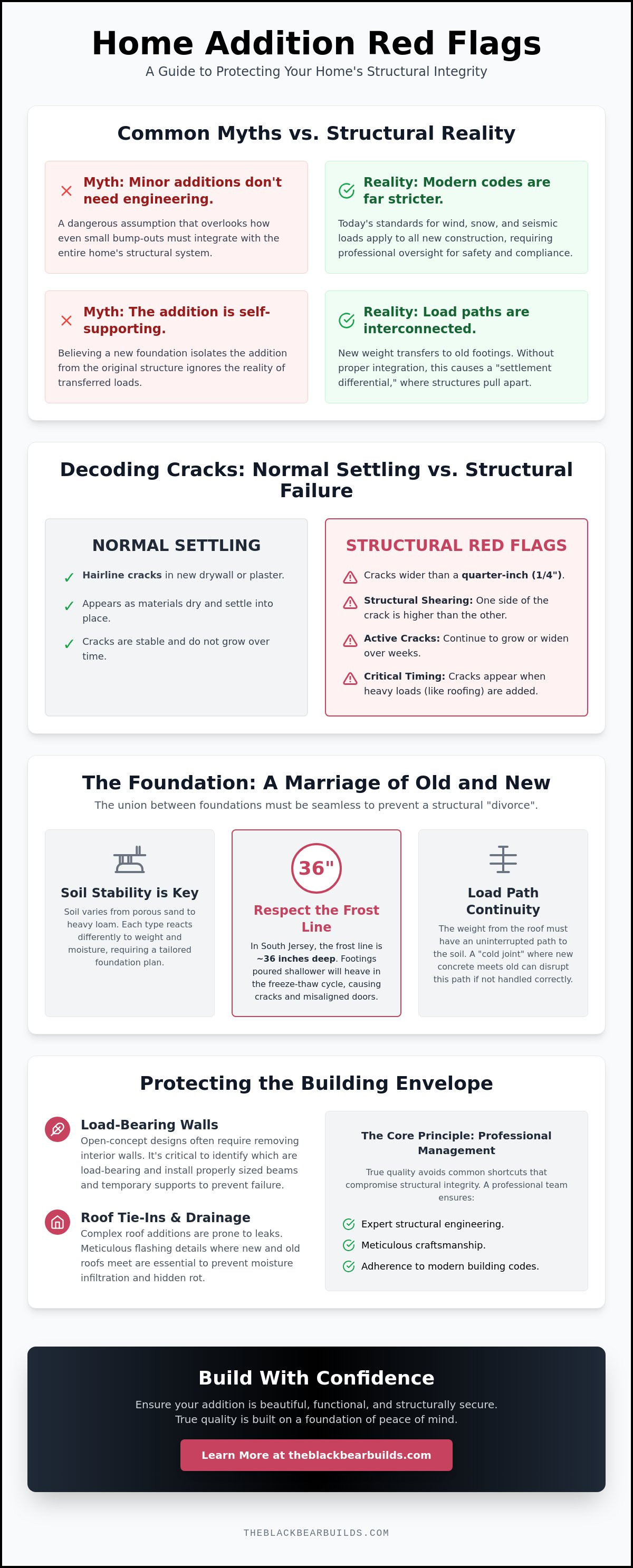
When we discuss a home, we often focus on the visual harmony of the architecture or the flow of the floor plan. However, the true soul of a home lies in its structural integrity. This term defines the ability of a building to remain stable, support its own weight, and resist external forces like wind or snow without failing. In the context of a residential expansion, structural integrity is not a static quality; it's a dynamic balance between the original house and the new construction. Identifying a structural red flags home addition begins with acknowledging that your house is an interconnected system of loads and supports.
There is a common myth that a "minor" addition, such as a small breakfast nook or a modest bump-out, doesn't require the same level of engineering as a full-scale wing. This is a dangerous assumption. Modern additions in South Jersey must adhere to contemporary building codes that are significantly more stringent than those in place when many Medford or Cherry Hill homes were built in the 1950s or 70s. These modern standards account for updated seismic data, increased wind resistance, and higher snow load requirements. A professional builder ensures that every new beam and joist respects these current regulations while safely integrating with the older, existing framework.
Myth: "The Addition Is Self-Supporting"
Many homeowners believe that because an addition has its own foundation, it stands entirely on its own. This is rarely the case. Most additions are physically tied into the existing structure, which means the new weight often transfers to the old footings. If these original footings weren't designed for the extra burden, you'll encounter a settlement differential. This occurs when the new wing and the old house sink into the soil at different rates, causing the two structures to pull apart. To prevent this, we focus on Load Path Continuity. This is the uninterrupted route of weight from the highest point of the roof down to the supporting soil.
Normal Settlement vs. Structural Failure
Distinguishing between cosmetic flaws and structural disasters is vital for your peace of mind. Hairline cracks in new plaster or drywall are often just the result of materials drying out and finding their place. However, structural shearing is a different story. If you notice a crack where one side is physically higher than the other, or if the crack is wider than a quarter-inch, it's a structural red flags home addition warning. The timing of these flaws is a critical diagnostic tool. Cracks that appear the moment the roof is shingled suggest the frame is struggling under the weight. Active cracks, which continue to grow or widen over several weeks, indicate that the structure hasn't yet found its equilibrium and requires an expert's eye.
Foundation and Soil Red Flags: Ensuring a Stable Marriage Between Old and New
A home addition is far more than an adjacent structure; it's a permanent structural marriage. When two foundations are joined, they must act as a single, cohesive unit to support the weight of your family and your dreams. If this union isn't executed with precision, the two halves of your home will eventually attempt to divorce. This separation is one of the most significant structural red flags home addition projects can exhibit, often leading to costly repairs and compromised safety. In South Jersey, the success of this marriage depends heavily on understanding the ground beneath your feet.
Soil stability varies greatly across our region, from the porous, sandy stretches of the pine barrens to the heavy, silty loam found in Medford. Each soil type reacts differently to weight and moisture. A critical warning sign of a failing project is the neglect of the South Jersey frost line, which sits at approximately 36 inches. If footings are poured shallower than this depth, the natural freeze-thaw cycle will cause the foundation to heave. This movement results in cracked masonry, jammed window frames, and doors that no longer latch. We believe in doing things correctly the first time, ensuring every footing is deep, wide, and set on undisturbed earth.
Another technical concern is the "cold joint." This occurs when new concrete is poured against the old, cured foundation of your original home. Because concrete doesn't naturally bond to existing concrete, this seam is the number one spot for future leaks and shifts. Without proper waterproofing and structural tying, this joint becomes a gateway for moisture and instability. If you're planning a project and want to ensure these details are handled with expert care, our team specializes in additions and structural work designed for permanence.
The Connection Point: Where Additions Often Fail
The most visible red flag at a connection point is a vertical gap appearing at the "seam" where the new wing meets the original house. This indicates that the contractor likely failed to use rebar pinning. This process involves drilling into the existing foundation and epoxy-setting steel bars to lock the two structures together. Without these anchors, the addition is essentially floating. It will pull away as the soil settles, creating a breach in your home's thermal and structural envelope.
Soil and Grading Red Flags
Water is the primary enemy of structural stability in NJ additions. If the grading around your new space isn't meticulously sloped away from the walls, hydrostatic pressure will build up against the foundation. You might notice dampness in the crawlspace or "efflorescence," a white powdery substance on the concrete walls. Furthermore, watch for signs of "unconsolidated fill." If a contractor uses loose, uncompacted dirt under your new slab, the floor will eventually sink, crack, and pull away from the baseboards. True craftsmanship requires a steady, intentional approach to every layer of the build, from the soil up.
Load-Bearing Limitations: Identifying Interior Red Flags Before Tearing Down Walls
The allure of a seamless, open-concept floor plan is often the driving force behind a modern expansion. However, the desire for wide-open spaces can lead to what we call the "open concept trap." Many believe that removing a wall is as simple as inserting a large beam, but structural reality is far more complex. Every wall you remove redistributes the weight of your roof, upper floors, and even the snow sitting on your shingles. Identifying a structural red flags home addition requires looking beyond the new drywall to see how that weight is being managed within your home's skeleton.
A tell-tale sign of a project in trouble is the state of temporary shoring. Before a permanent beam is installed, a professional team uses temporary walls to support the structure. If the job site appears messy, haphazard, or disorganized, it's often a reflection of the structural care being taken. Shoring that looks flimsy or lacks solid footing on the floor below indicates a high risk of sudden shifts or collapse. Beyond the construction phase, keep a watchful eye for sagging headers or "bouncy" floors in your new space. A floor that vibrates when you walk across it or a ceiling that seems to dip in the center suggests that the materials chosen aren't stiff enough to handle the span.
The Header and Beam Red Flag
In luxury construction, Laminated Veneer Lumber (LVL) is the standard for creating wide, stable openings. These engineered beams provide the permanence, strength, and precision that traditional lumber cannot match. You can spot an undersized header by looking for diagonal cracks in the drywall at the upper corners of a wide opening. These "stress fractures" indicate that the beam is deflecting under its load. Additionally, beware of "notched" joists. If a contractor cuts deep notches into floor joists to run plumbing or electrical lines, they've compromised the integrity of the entire floor system, creating a significant structural weakness.
Point Loads and Post Support
One of the most critical oversights in home additions is the management of point loads. When a large beam replaces a wall, the weight that was once spread across many studs is now concentrated onto two single posts at the ends. This weight doesn't just disappear; it needs a clear, solid path all the way to the foundation. A major structural red flags home addition occurs when these support posts sit directly on a floor joist or a subfloor without a dedicated post or footing underneath in the crawlspace. Look for signs of "crushing" at the top or bottom of these posts, where the wood fibers are physically compressing. This indicates that the load is far greater than the support can handle, requiring immediate professional intervention to ensure your home's long-term stability.
The Building Envelope: Spotting Drainage and Roofing Red Flags in Addition Design
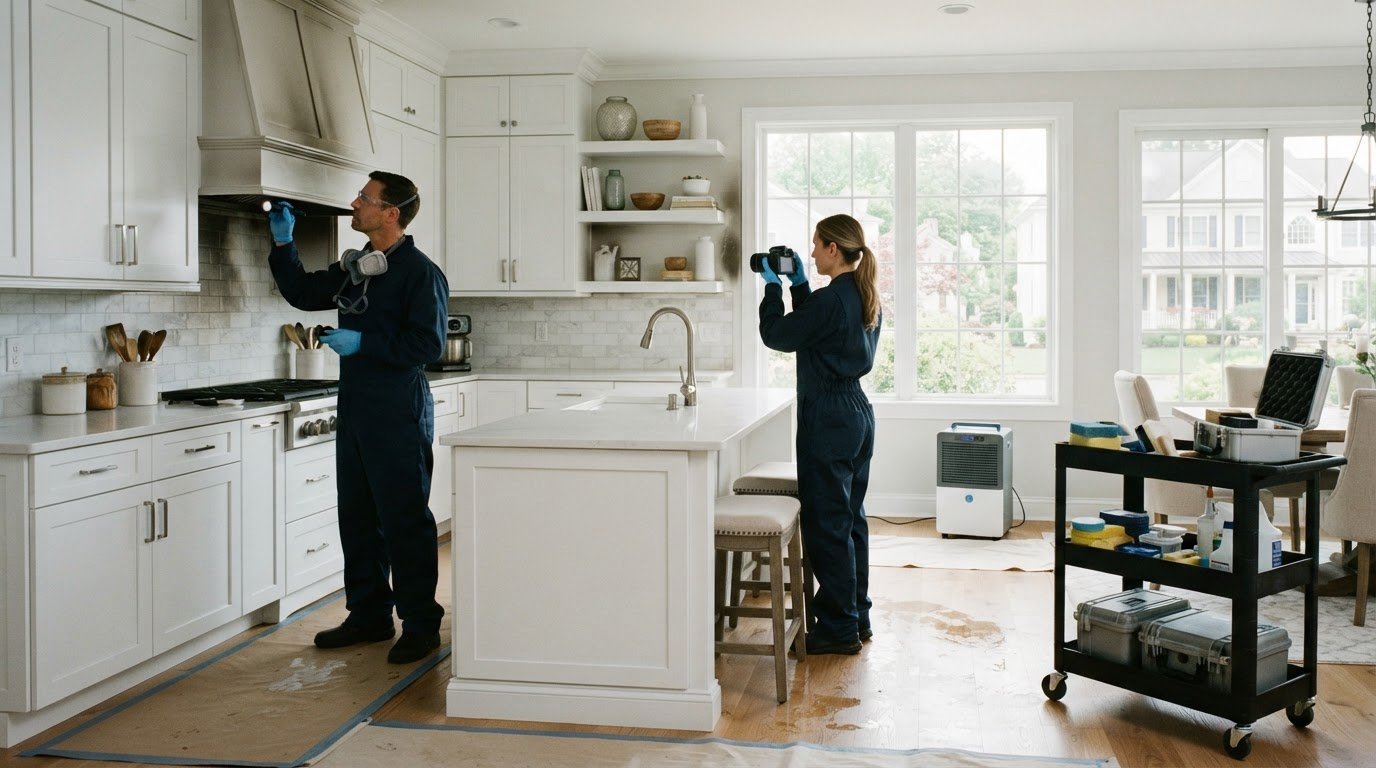
The exterior shell of your home, known as the building envelope, serves as the primary defense against the unpredictable South Jersey climate. When an addition is introduced, the most vulnerable area is where the new roof meets the existing structure. This "roof tie-in" is a notorious failure point because it requires a seamless integration of disparate materials and angles. If this area isn't handled with meticulous care, it becomes one of the most persistent structural red flags home addition owners face. Poorly executed tie-ins lead to hidden rot and moisture damage that can compromise the entire project over time.
Improper metal flashing is often the culprit behind these failures. While it may seem like a minor detail, flashing is the critical barrier that directs water away from structural seams. When metal work is rushed or omitted, water seeps into the wall cavities, quietly rotting the studs and headers from the inside out. Similarly, keep a watchful eye on your drainage systems. Gutters that dump large volumes of water directly onto the new foundation can lead to soil erosion and the hydrostatic pressure issues we discussed previously. These details require a craftsman's eye to ensure the long-term health of your home.
Roofline Integration and Flashing
To ensure your new space remains dry and stable, follow these three inspection steps during the build. First, inspect the "valley" where the new roof meets the old. This area must be lined with a heavy-duty ice and water shield to prevent ice dams during cold NJ winters. Second, check for "step flashing" along the siding of the existing house. This involves individual pieces of metal tucked under each shingle and behind the siding. Finally, ensure the pitch of the new roof allows for proper South Jersey snow load management. A roof that is too flat will accumulate heavy, wet snow, putting unnecessary strain on the new structural frame and creating a significant structural red flags home addition risk.
Window and Door Alignment
Inside the home, windows and doors act as a sensitive diagnostic tool for structural health. While many homeowners attribute a sticking door to summer humidity, it's frequently the first sign of a sinking footing. If a door that previously operated smoothly suddenly won't latch, the foundation may be shifting. Follow the "Diagonal Crack" rule: look for cracks radiating at a 45-degree angle from the corners of window frames. These suggest that the opening is being squeezed or twisted by a settling structure. For a deeper look at ensuring your project is built to last, consult our guide on a structural home addition South Jersey. If you suspect your current project is showing signs of distress, our experts can help you secure your additions and structural work before small issues become major failures.
Moving Beyond the Red Flags: How Professional Structural Management Protects Your Investment
Navigating a construction project requires more than just a blueprint; it requires a partner who values permanence over speed. When you understand the structural red flags home addition projects might encounter, you're better equipped to choose a team that prioritizes safety. We believe in "Frame to Finish" craftsmanship. This philosophy ensures that the structural precision of the skeleton directly informs the beauty of the final trim. If a frame is even slightly out of plumb, the crown molding and baseboards will never sit flush, revealing a lack of foundational care. Precision at the start is the only way to achieve a sophisticated result at the end.
In South Jersey, particularly in historic areas like Haddonfield or the varied terrains of Medford, managing the marriage of old and new is a technical art form. We avoid the temptation to cut corners by utilizing expert project management and offering in-house financing. This financial and logistical stability allows our team to focus entirely on the integrity of the build rather than rushing to meet a frantic deadline. When the budget and schedule are well-managed, structural decisions remain principled, thorough, and uncompromising. A well-crafted environment should provide a sense of stability that you can feel the moment you walk into the room.
Choosing a Meticulous Craftsman
A principled and thorough approach might seem more intensive during the planning phase, but it's invariably more cost-effective in the long run. When interviewing contractors, ask specific questions about their foundation pinning process, their choice of engineered lumber, and how they handle moisture barriers at roof tie-ins. Understanding these details helps you avoid the high costs of structural remediation that follow a poorly managed build. To help you prepare for your project, we have developed a home addition cost South Jersey guide to assist with your budgeting and planning needs.
Peace of Mind Through Professional Integrity
We take pride in explaining the "why" behind every structural choice we make. Whether it's the specific depth of a footing or the precise placement of a point-load post, every decision is made to ensure stability, safety, and aesthetic harmony. This level of dedication is what transforms a simple expansion into a seamless, permanent part of your home. You deserve to feel confident that your family's sanctuary is built on a foundation of expert knowledge and professional pride. If you're ready to move forward with a partner who is as invested in the outcome as you are, contact Black Bear Construction for a structural consultation today. We are here to guide you through a journey of refinement and structural excellence.
Building Your Future on a Foundation of Confidence
Your home addition should be a source of pride and comfort, not a source of lingering doubt. By understanding the critical structural red flags home addition projects can present, you've taken the first step toward protecting your family and your investment. You now know that a safe expansion requires meticulous foundation pinning, uninterrupted load paths, and a building envelope that truly defends against the elements. These technical details represent the difference between a temporary fix and a permanent legacy that resonates on a personal level.
Our team brings over a decade of hands-on structural experience to every Medford and South Jersey project. We specialize in luxury "seamless flow" additions that act as a natural extension of your original architecture. With a deep understanding of local NJ codes and a dedication to principled craftsmanship, we provide the stability your sanctuary requires. We believe that true quality is found in the details that remain hidden behind the walls, ensuring your new space is as solid as it is beautiful.
Start your home addition journey with the structural experts at Black Bear Construction today. We look forward to building a space where your family can feel truly secure for generations to come.
Frequently Asked Questions
Is a horizontal crack in my basement wall always a structural red flag?
Yes, horizontal cracks are significant indicators of structural distress. Unlike vertical cracks that often result from minor settling, horizontal fissures suggest that hydrostatic pressure from the surrounding soil is pushing against your foundation. This pressure can cause the wall to bow, tilt, or eventually fail. If you notice this pattern, it is essential to seek a professional evaluation to ensure your home remains stable and secure.
How can I tell if a wall in my South Jersey home is load-bearing before I start an addition?
You can identify load-bearing walls by observing the direction of your floor joists and the placement of basement beams. Walls that run perpendicular to the joists or sit directly above a support post are typically carrying the weight of the structure. In many South Jersey residences, exterior walls and central corridor walls are designed to be load-bearing, acting as the primary skeleton for the floors above.
Will my home addition naturally settle, or are those cracks a sign of a problem?
Minor hairline cracks in new drywall are common as wood dries and materials find their equilibrium. However, wide, jagged, or stair-step cracks in masonry are a structural red flags home addition warning. If these cracks are accompanied by sticking windows or sloping floors, they indicate a failure in the load path. True structural integrity relies on a foundation that remains level, permanent, and undisturbed over time.
What should I do if I see my new addition "pulling away" from the original house?
You must contact a structural professional immediately if you notice a visible gap forming between the two structures. This separation usually indicates that the new foundation was not properly pinned to the existing one or that the footings are sinking. Stabilization requires expert intervention to anchor the structures together using steel reinforcement. Addressing this early prevents moisture infiltration, thermal loss, and further structural degradation.
Do I need a structural engineer for a single-room home addition in NJ?
Yes, New Jersey building codes generally require a licensed professional to provide signed and sealed drawings for any structural expansion. Even a single-room addition changes how weight is distributed across your original home. An engineer ensures that the new footings, headers, and roof lines are calculated for safety. This oversight protects your investment, ensures code compliance, and provides essential peace of mind for your family.
What are the most common structural red flags found during a South Jersey home inspection?
Inspectors frequently identify unpermitted structural modifications, undersized support beams, and improper site drainage as primary concerns. In our region, we also see many structural red flags home addition issues related to termite damage in older sill plates or "bouncy" floors caused by over-spanned joists. A thorough inspection reveals whether the craftsmanship is principled and thorough or if corners were cut during previous renovations.
Can a luxury kitchen remodel cause structural issues if the layout is changed?
A kitchen remodel can absolutely compromise structural integrity if load-bearing walls are removed to create an open-concept flow. Changing the layout often requires new beams to carry the weight of the upper floors. If these beams are undersized or lack a clear path to the foundation, you will experience sagging ceilings and cracked plaster. Expert management ensures that your aesthetic transformation is supported by technical mastery.
How does the sandy soil in Medford, NJ affect the foundation of a home addition?
Sandy soil provides excellent drainage but lacks the natural cohesion of clay, meaning it can shift if not properly compacted. In Medford, foundations must be designed with wider footings to distribute the home's weight across a larger surface area. This prevents the addition from sinking unevenly into the porous earth. Meticulous soil preparation is the first step in creating a space that feels grounded, stable, and permanent.
Comments